The Medieval cemetery at Spitalfields is one of the largest excavated graveyards in the world today. Hard work by MOLA between 1998 and 2001 unearthed a staggering 10,516 burials of this number 5.300 have been studied with much detail. Some of the places of the cemetery destroyed during the construction of Spitalfields market, it is probably around 18,000 people were once buried there. Also there was an unmatched corpus of skeletal material for the period, a programme of Bayesian radiocarbon dating by Alex Bayliss and Jane Sidell has provided a number for the Medieval cemetery. Obtaining much detailed phasing for a site type that is noticed for hard being to date proved useful when it came to understanding how the cemetery population met their fate. It also allowed change within that population to be studied over time.
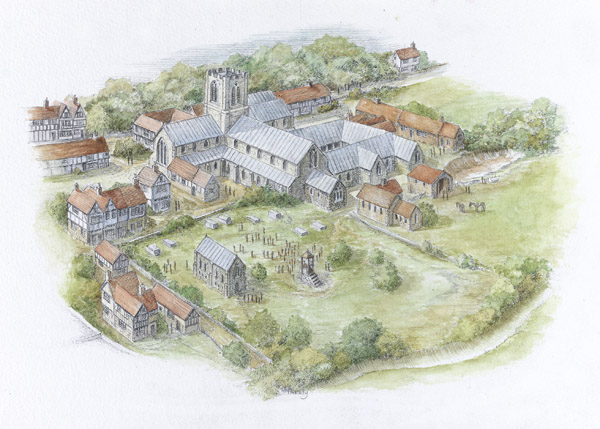
Spitalfields cemetery was closely associated with the priory and hospital of St Mary without Bishopsgate, later known as St Mary Spital.
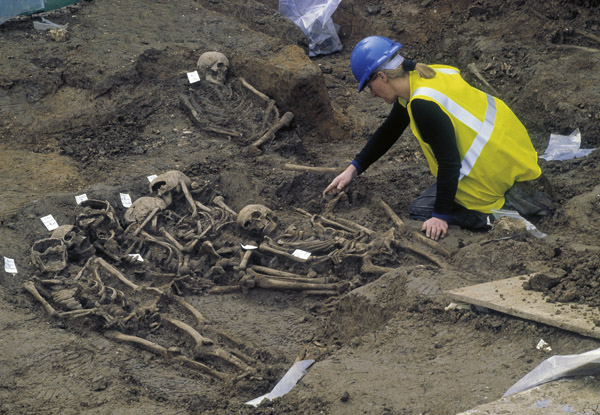
The first burials in the cemetery, however, seem to have been a response to pressures of a different kind. Radiocarbon dated to about 1120, the earliest bodies pre-date the priory by a good 70 years. The corpses were dumped in open pits. Such type of burial is much different from any known religious house evokes an emergency situation in which large numbers of bodies needed to be disposed of rapidly. If so, it was certainly not the last time that a disaster got held of the suspension of normal burial practices at Spitalfields.
 The
foundation of St Mary Spital brought the construction of a
church at the north-west corner of the cemetery, while the other
buildings were nearby. Though the most of those laid to
rest in the graveyard were placed in individual grave shafts in
neat rows, excavations revealed a group of 140 large pits clustered
along the south and east margins of the cemetery.
The
foundation of St Mary Spital brought the construction of a
church at the north-west corner of the cemetery, while the other
buildings were nearby. Though the most of those laid to
rest in the graveyard were placed in individual grave shafts in
neat rows, excavations revealed a group of 140 large pits clustered
along the south and east margins of the cemetery.Dug as far from the main buildings as the cemetery allowed, each pit had between 8 and 40 bodies. A sure sign that the death rate had once again overdid existing burial measures, wishing to keep these mass graves away from inhabited areas underscores a very real fear of the dangers the bodies could pose for the living. In London, the natural reaction to discovering such mass burials is to think them as plague pits from the 1348 Black Death.
Radiocarbon analysis proved false to this idea. Consistently returning dates around the mid 13th century for both sets of burials, this placed them almost a century too early for the Black Death. It was this hard number information that made Don Walker and Amy Gray Jones of the University of Chester to make a connection between the later group of mass burials and the widespread fatalities seemingly brought on by climatic change in the wake of the 1258 eruption.
The earlier pits would fit reports of a famine in 1252. The difference in rigor appears to have been marked – while the first mass graves typically contain between 8 and 20 bodies, the second group were larger and held 20-40, making that up to twice as many corpses needed disposing of at any given moment. Between them the two pit groups contained 2,323 people from the studied sample, accounting for over half the analysed bodies buried in the cemetery during this period.
If you want more information on this you can go to http://www.archaeology.co.uk/articles/features/londons-volcanic-winter.htm
